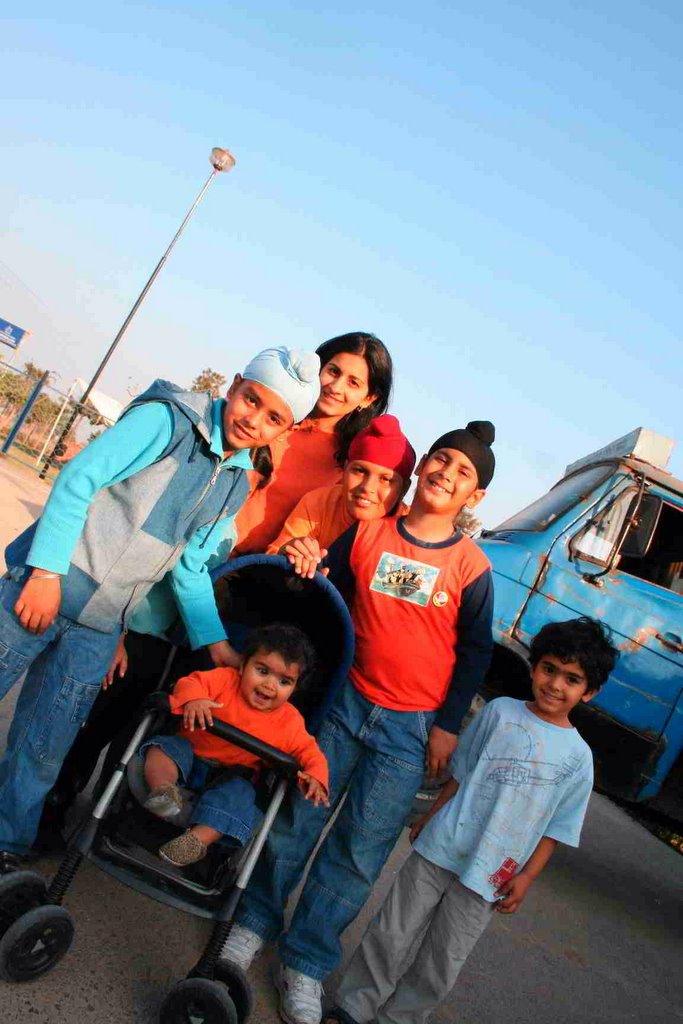
Showing posts with label punjab. Show all posts

Wednesday, June 30, 2010

Anatomy of a Bribe

So last night we were with a friend driving to an Italian restaurant for dinner. She makes an illegal U-turn, and we get pulled over by the cops. Our friend says, "oh great, here we go. Watch and learn."

Cop: "License."
Friend: "Sorry Sahib. I wasn't paying attention."
Cop: "License."
Friend: "There were so many cars, Sahib, I got confused for a moment. It won't happen again."
Cop: "License."
Friend: "My brother, please let me go. I wont make the mistake again."
Cop: "Madam, please come outside and bring your license."
Friend: "Sahib, I don't have much time, can't we just be done now. Lets just finish the bill now."
Cop: "Madam, please come."

Our friend steps out of the car, walks over to a shack filled with cops. In this city, the cops set up a special booth on the side of a given roundabout. A cop stands outside and points at drivers, indicating they need to pull over. The "processing center" is where a few other cops formalize the tickets, or gather whiskey money, depending on the time of month.

Friend returns to the car a few minutes later. "Okay, just waiting for my change. All I had was a 500 note."

Cop taps on my window. I roll down the window.

Cop: "Sir, please remember to have your seat belt fastened at all times."
Me: "But I do have my seat belt on."

Cop, annoyed at my ignorance, with closed fist, reaches into the car and plops some notes onto the seat, then says, "yes, please remember safety at all times." He walks off.

We drive away. My friend starts laughing, "my change please. Gosh I wish I would have had a 100 note, would have saved me 100 rupees. I had to bargain down to 200 for a couple minutes. Its tough, you know, they see this huge car, and the rate quadruples."

I ask, "so what are the rates?"

Friend: "10 for a bike, 20 for a rickshaw, 50 for a scooter, 100 for a nice motorcycle or tiny car, 200 for a big car."

I say, "And what if you actually paid the ticket?"

Friend: "300. But I have to go across town to pay the ticket. Would have taken me an hour."

Me: "And why all the sneakiness?"

Friend: "Well they are really careful since a lot of journalists set up anti-corruption sting operations, with mobile phone videos and the like. Technically, with this entire transaction, we have no idea if we paid a bribe, or a reduced ticket on the spot. And also, whenever they are fund raising for the police department, there is nothing you can do, you have to pay the ticket. That's when their superior officers are present and watching."

Me: "And by your guess, what percentage of folks pay the bribe?"

Friend: "Maybe 1 in a hundred does not."

And on a final note, if you enjoyed this post, you should check out these recent NPR podcasts on corruption in India:

Monday, May 24, 2010

The Amazing Sikhya School

I've recently become quite interested in the non-profit sector's work in combating the crushing poverty here in India. My aunt suggested I check out an old friend of her's school. So my wife and I spent some time with the principal, my aunt's friend, and toured the school. Sikhya is a non-profit school providing a high quality education and nurturing environment exclusively to slum dwellers and other extremely poor children for free.

While the government offers an almost free education, the quality is significantly below that of the education offered at myriad private schools. Many of the government school's are grossly underfunded and mismanaged. There are an amazing number of stories about teachers that never show up to class, standardized test scores that are simply manufactured, or the answers are distributed to the kids by corrupt principals ahead of time so school incompetence cannot be effectively measured. I'll save chatting in more depth about the public schools, as, despite all of this, there has been some improvement the past few years in Punjab, in part due to private money from the west arriving most often in the form of NRI (Non-Resident Indians) money given directly to school projects.

Sikhya strives to match the standards of the elite private schools in the city. Sikhya also provides a nurturing and loving environment for these kids who come from extremely difficult backgrounds. All schoolwork is performed in school; this is because, according to the school teachers I chatted with, it is simply impractical for the kids to do work at home -- most do not have electricity in the slums and many are required to work long hours. Another challenge is abuse; many kids are abused at home, and tragically, there simply is not an effective social service system in India which can help. Despite all these difficulties, it is obvious from the photos below, that the kids are thriving.

The computer labs are quite extensive at Sikhya, complete with broadband Internet connectivity.

When Slumdog Millionaire came out, many friends of mine asked me if the slums are really like that in India. I said, well yeah, in fact, they're even worse. Its tough to convey just how stinking hot it is here on the big screen, not to mention, how stinking stinky it can be. I also hear from friends and family traveling or living here that everyone is corrupt, and there's not much anyone can do. This is patently false, Sikhya school was set up by one man who simply wanted to do some good.
There is no doubt corruption is rampant in India, but it is also true that everywhere you look there are examples of honest, caring locals striving to improve the situation.

We were so inspired with the Sikhya school that we started volunteering a few days a week. Our first assignment was to paint murals. The school is broken into 5 groups, one for each of the basic "elements," which according to eastern philosophy and religions, are the base materials from which the universe is made.


It costs 200 US$ to educate one child for one year at Sikhya. The school can arrange for you to sponsor a specific child, or children, and track their progress through school and life.

My favorite part of working on the murals was meeting the curious kids wandering about.


If you wish to donate to Sikhya school, please drop an email to: sikhya_head@rediffmail.com and mention you are friends of Deep and Ameen. Unfortunately they don't have PayPal set up, but you can either wire money to the school's bank or send some along with a relative visiting India.

Drop me a note if you are interested in setting up a letter writing exchange with students of a particular grade.

Drop me a note if you have any trouble donating or volunteering.

Saturday, May 15, 2010

The Rockin Rikshawala

My son and I flagged down a bicycle rickshaw for our journey home tonight. As I stepped onto the rickshaw, I noticed it was brand spankin' new -- cardboard and plastic still wrapped much of the cycle's tubing. After the many hundreds, perhaps thousands of rickshaw rides I've taken in India, not once have I ever ridden on a brand new one. So I said to Gopal, "Vah, your rickshaw is absolutely fantastic!" He smiled and said, "No Sahib, this one is already a month and a half old. Its simply okay."

As we were cruising home, Gopal was totally cranking -- I've never seen someone pull a rickshaw this fast. It was obvious something was different about Gopal. It turns out, Gopal owns 14 rickshaws; he himself rides 7 days a week, 18 hours a day -- from pre-dawn, through the searing summer heat, and late into the night. He keeps a brand new rickshaw for himself, once it gets a little old, he adds it to his collection of rentals. According to Gopal, the average Chandigarh rikshawala will earn between 2500 and 5000 rupees a month (that's between 58 and 116$US). Gopal makes about 900 rupees per month on each rickshaw he rents out. A brand new rickshaw costs 9000 rupees. Now according to Gopal, each rented rickshaw comes with significant overhead, there's the occasional worn out tire, a broken chain, and other bike maintenance related problems, but his biggest expense has more to do with his riders, who can require a fair amount of money for things like a marriage (for their daughters), a funeral, medical bills, etc. So all in all, Gopal says he grosses about 15000 rupees a month, and after all his expenses, pulls home around 11000. I asked him how he manages 13 other rikshawalas. Gopal says he has a cell phone in his pocket, they call him if there are any problems. All his riders return their bikes to him at the end of the day, where they all sleep on their rickshaws together. He said he has no problems with the government and hence no need to pay any bribes. There is a one time license fee of 500 rupees per bicycle. I also asked if he had any problems with riders running off with his bikes. He said no, he has all their paperwork in order, they have to sign for the bikes, and he learns all their family history before hand. I asked Gopal why he doesn't upgrade to an auto-rickshaw. He laughed and said, "Never. That is the worst business ever. For them it is just a status symbol, that they don't have to work hard like us." Apparently autos have many maintenance expenses, petrol expenses, license fees, taxes, penalties (tickets for things like too many passengers, traffic violations, etc.), money for bribes and more. Gopal says his business is good, hard work for sure, but good.

I asked him where his wife and kids are. He says he owns a house in Delhi, has 3 kids, 1 of marriageable age. His daughter's marriage will cost him 1.5 to 2 lakhs (3500$US to 4650$US). He has 3 rickshaws running in Delhi, he visits once a month or so, otherwise he sleeps on his bike, and keeps growing his business.

I must say, I was totally blown away by my conversation with Gopal. Before Gopal, like most others, I thought of rikshawalas as men to feel sorry for, men with few options, no education, and little money. While 11000 rupees per month doesn't sound like much to a westerner ( a mere 256$US) its almost twice as much as a teacher makes here, and more than 6 times what a farm laborer makes. And most importantly, Gopal's income is growing. I asked how many more rickshaws he thinks he could handle. He felt he could double the number without many problems. I asked how many rikshawalas are entrepreneurs like him -- he kept peddling, and just laughed.

Monday, May 10, 2010

I Love the Rain


No AC buzz. No whirling fans. No reason to squint. Black sky cracks open, and dumps a bucket of bliss. The searing heat subsides, at least for the moment.


And the sun returns, though the rain is not forgotten.

Thursday, April 29, 2010

Things to Do in Chandigarh When its 112 Degrees Out

Find a nice comfy spot to take a nap.


Find some shade and get a shave.


Find a job in an air conditioned museum and take a nap.


Hang out.

Friday, April 16, 2010

Akhand Path in Sukharan

We recently went to an Akhand Path in Sukharan, my maternal ancestral village. I wrote a detailed blog post a few years back on the history of Sukharan. If you're interested, you can read it HERE to see the story of how a Punjabi village formed and evolved. Also, don't forget, you can click on any of the images in this post to see a much more clear, higher resolution version of the image.


Random village singing extortionist women who heard about the Akhand Path. They sing and sing and sing and then say things like, "Aray Bibiji, you've come from so far, and heard our songs, please give us some money now. Thats it! More now, come on, we are such good singers. This is such a small amount of money for a person as impressive as you." This is the crew leaving after a successful mission of cash extraction; notice the bag of cash slung over the woman on the left's shoulder.


Ananya suspicious of yet another photo.

My nephews listening to the amazing kirtan in the Gurdwara.

I dig the Bollywood cinemagraphic quality of this shot.


These guddas used to be everywhere in Punjab, but the numbers have plummeted recently, like so many other Punjab classics. Modernization has really started to take root. Back in the day I used to love riding in the back of a gudda.


Fortunately, Facebook and the XBox haven't yet hit in the village, so raising Nishan Sahib at the Gurdwara is still a big deal. We all hung about for a few hours as this gentleman shimmied up the flagpole to wrap and raise a bright new flag of the Khalsa.

More fun with slow shutter speeds at dusk.


Nayan cruising with his new pindh buds, aka, Punjabi homeschooling lessons.

Sunday, April 11, 2010

1st Day of School

After months of homeschooling, we have finally surrendered our children's learning to someone else. The kids started school today at The Millenium School in Mohali. After multiple frustrating months of trying to arrange for the kids admission remotely, and despite all the warnings we got from folks, it was remarkably simple to find a great school and get them admitted on arrival. The hardest part was actually paying for the school (and our flat).

Its quite awkward doing business in cash; I felt like a gangster running around town with bags of money, sitting across from someone and repeatedly counting out bills one by one for many minutes. Most folks here have boxes full of fruit colored cash lying around for such transactions, but we were left with repeated trips to the ATM, and an onslaught of phone calls from vigilant bank officials back in the states.

The school itself is quite impressive: swanky new buildings, oodles of computers, projection systems, cute uniforms, and heavy piles of books. The school is taught in English, which wasn't our first choice, but too many folks were freaking out about the kids being kidnapped or getting lice from the "low class" Punjabi schools. Nonetheless, the kids have a class for Punjabi, Hindi, English, Math, "Computer Training" and some other subjects like Environmental Science.

On admission, Nayan took a challenging examination. Its a good thing we home schooled him in math and brought him up to Indian standards, the Seattle School system is spectacularly slow, and North Beach uses an overly repetitive curriculum called Saxon. We switched him onto the Singapore math curriculum, augmented with my own impromptu few months of computer programming (using a cute visual programming language called Scratch), where he wrote automated math exam programs. The excitement of taking exams of his own creation kept Nayan excited and motivated.

The school itself is quite impressive. A bus swings by in the mornings, picks the kids up, and hauls them off. For the young ones, there are Ayas, or nannies, on the bus. Ameen hopped on the bus for Ananya's first day to witness multiple shreaking 2 year olds (yes they start school here that young) who were quickly scooped up into the warm, loving arms of the Ayas, and eventually cooed into smiling submission. Once at school, the teachers greet the buses, slurp the kids off and pop them into class. Unlike virtually everything in India, the schools are remarkably organized and efficient.

After the kids left, my wife and I realized that this is the first day in 8 and half years that we've been alone together. To celebrate, we're heading to The Taj for breakfast.

Saturday, January 23, 2010

Boys, Bodies and Bashings

One of the greatest joys of marriage is that your partner's stories become your stories. So my wife was sitting in the kids play area at Plaza Cortezar, the local park and restaurant area where we spend a lot of time. The kids were busy digging in the sand, sliding and playing their never ending game of tag. It was late morning, lots of folks were milling about, many sipping coffee, some setting up for the daily craft fair, and some preparing their restaurant for the day. A couple guys in their late teens were a part of a construction crew working on some repairs in the plaza. One of the boys was drunk. The two broke out into a fist fight. All bystanders remained in their pre-fight positions; no one rushed in to stop the fight or gawk, but everyone was watching, and aware of the fight. At one point, the drunk boy fell to the ground and struggled to stand. Blood gushed out of his nose. The other boy kicked him hard in the face. At this point, immediately multiple older men, around 50 years in age, stepped in, constrained the standing boy, and walked him away. Other men helped the fallen boy, someone arrived with a large bottle of water and poured it on his head; another brought a towel and started cleaning his wounds. Soon the police arrived.

So what my wife found most interesting were the cultural dynamics at play. For one, it seemed no one was particularly worried about weapons, or serious danger. Also, there was an acceptance that boys will be boys, and the fight was fair and therefore immediate intervention was not required or desired. Upon the violence taking a turn toward the "unfair," however, with one boy clearly down and incapacitated, bystander response was swift and thorough.

This story reminds me of another story. One day a few years back in Punjab, we were driving home from a day trip to the Himalayan foothills. My Thiaji (father's older brother), myself, my wife and kids. We slowly drove through the chaotic, dusty streets of Nawanshar. A cacophony of cars, goats, people, cows, honking buses, strewn wires, and a uniformed policeman directing traffic. As we approached the town center where multiple streets intersect, right in the middle of the street were about 15 boys, again late teens, in a full fist fight. My Thiaji scratching his gray beard, started laughing, "Deep, look at our boys! This is how we live. Ah, I wish I was young again." Thiaji then stopped the car in the midst of the chaos to chat with a policeman who was calmly directing traffic as if nothing was going on. Thiaji asked, "what's going on?" The policeman responded, "oh the kids are just bored, it happens every Friday evening." My uncle looked at the cop like he was totally daft, pointed out his window toward two flying fists a few feet away and said, "well of course, but what is this particular fight about?" He needed the details. Something about a boy, a sister, a crass remark. Thiaji rolled up his window, waved to the cop, smiled at the fighting boys, and we inched along, wondering what was for dinner.

Wednesday, May 13, 2009

Swords, Daggers and Punjabi Politics

A friend of mine, a local Seattle resident who recently relocated to India, is involved in the national elections there. While the western press typically presents Indian elections as a relatively pastoral exercise in democratic self governance, here are some snippets from our recent back and forth via email that show otherwise.

Friend:

Hope you are well. It's been a while since we chatted. I just came back from a short campaigning trip to Chandigarh last week. The Punjab elections are still going on (voting is the day after tomorrow).

Me:

Wow, campaigning in Punjab sounds exciting or scary and probably hot.

Friend:

Scary is an understatement. One of my friends, a really good guy, a professional, educated lawyer in the Supreme Court, who is contesting from one of the parliamentary constituencies there got attacked, his mother got beaten, his local president of the Congress party and his colleagues got stabbed with daggers and swords and are admitted in hospital. All by the Akali Dal guys ... they are out of control! We're asking for central police force for additional protection on polling day.

Me:

Unbelievable. Sorry to hear about your friends. Yeah, politics in Punjab can definitely be crazy. I think people haven't forgiven the Congress party for the 84 riots and subsequent total lack of punishment. Reasonable people mostly don't get involved in politics there, and when they do, they can wind up in the hospital or worse.

Friend:

Actually it's not at all because of the 84 riots. Initially I used to think the same. It's amazing how some politicians use random issues to create rifts between common people, most of who are regular people who want peace and jobs and agriculture.

More on the incident at Punjab Newsline in this article titled Prime Minister concerned about violence in Ludhiana.

Thursday, May 08, 2008

Photos from India Trip

You can see my photos from our recent to trip to India HERE.

Monday, April 24, 2006

Raising Sikh Children in a World of Illusion

sikh, life: I got carried away commenting on a blog I read (SinghsRus). I was responding to this:

Oh yeah!, one of the thoughts was to post something about Sikh parents as to how challenging the job of Sikh parents is to raise kids in a non-Sikh environment, teach them Sikhi and Punjabi. Sometimes I get amazed as to how are some of the parents are able to instill Sikh values in their children keeping in mind the social pressure of TV, media, non-Sikh cultural environment, peer pressures, their own insecurities etc.

Here's my comment after a bit more editing:

It is hard to raise a Sikh child in a world of mass maya. I think it is doable though. My wife and I, on the birth of our first child, decided this was very important. We eliminated the television from our house (after being scared silly by the synergistic marketing section of Fast Food Nation), and began learning Punjabi in earnest (we were both raised in the west and neither of us was fluent by any means).

Since our children were born, we have only spoken Punjabi with them in the house. To this day it feels very strange for me to speak english with my son. In addition we always translate the kids' books into Punjabi while reading them. This has proven quite a challenge for us given our limited language skills, and the ever increasing complexity of the texts as our eldest ages. In addition, we continue to buy many Sikh children books, and spend a lot of time reading them, discussing them, saying prayers with the kids, etc. We have also made a point of spending atleast 6 weeks every few years in Punjab. This was really important as prior to our trip, my son began refusing to speak in Punjabi -- after 6 weeks playing with his cousins, he realized it was not just his parents who speak this language. Now he complains his Paji's aren't here to tell him any Punjabi jokes. Spending time in Punjab also helped develop his view of Sikhism and bring historical events alive; he was thrilled to go to Anandhpursahib where the Guru of his books had fought and prayed.

I have also thought about making this task for parents like ourselves easier. When we started, most people in our community thought it was funny that two kids raised here could attempt to raise their kids speaking Punjabi when their own skills were so terrible. They often teased us -- saying even if we could manage to teach them, the kids would forget it all before their 5th birthday. While we have yet to reach our fifth birthday, the teasing just made us all the more determined. Now the "Aunties" and "Uncles" all get a kick out of speaking w/ our son and hearing his authentic kid-slang; the elder generation gets glassy eyed while waxing about teaching their grand kids, and some of the younger generation have also chosen to "keep it real."

Having age appropriate books, videos, etc. would help quite a bit. We have had to go to Jallundar and comb the bazaars just to find good books, movies, etc. I often think about a start up company catering to people like us; then I always shelve it since it isn't technically interesting enough (I'm a bit of a techy type).

Wednesday, January 11, 2006

macro-views

its over a week since we returned, and i'm still rising at 5AM. nayan wakes up at 4, and then eats his first breakfast. after feeding him, he roams the house playing with his toys. here's a post from a few days ago while back in india:
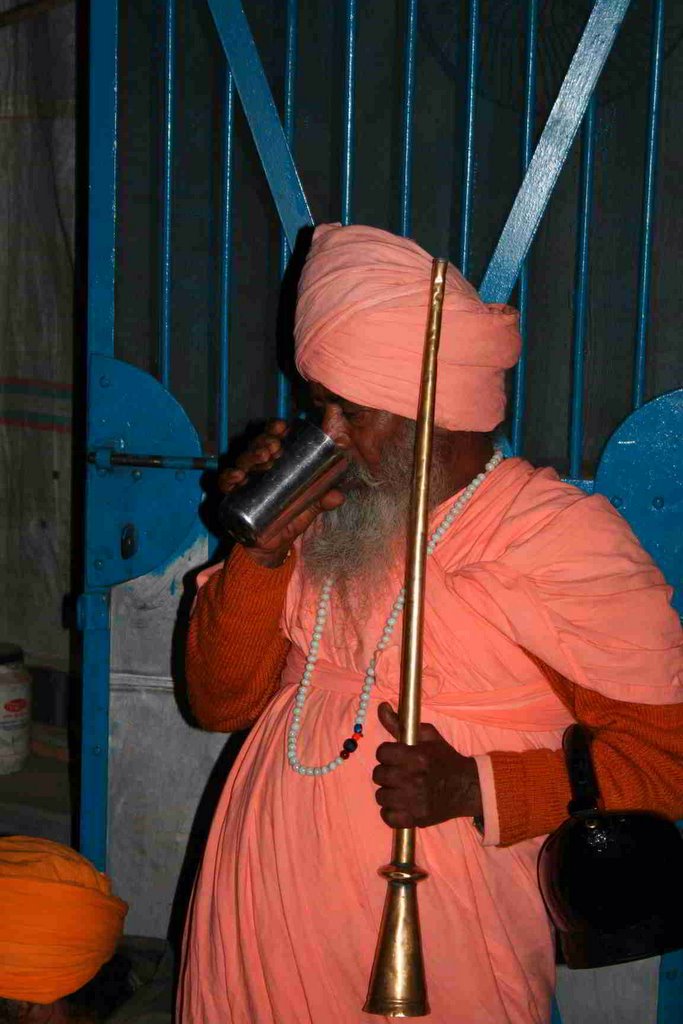
when i read things in the US, about the war in iraq, and political instability, i tend to put the information and my mental image of the place into a little box that i can open and close -- typically when starting and stopping a news article, or conversation on the topic. punjab, as most of you know, experienced quite a sustained period of insurgency and political instability. from the early 80s until the mid 90s, punjab was in essentially a state of war. sikh separatists were fighting for an independent nation to be called khalistan. it was a 'terrorist' style war that affected nearly everyone in punjab, my family included. one thing that strikes me while here, is that while society has returned to "peace and stability," the wounds of this period are still very fresh. another thing that strikes me, is that there are bizarre conspiracy theories for just about everything, including the khalistan question.

let me start by explaining my macro-view on the period of conflict. i should first say, i have a read a small amount and spoken with a number of people over the years, but i by no means have a thorough academic understanding of the subject. anyway, to distill a large complex topic into a couple lines, basically, here's my take:

1. sikhs, are a relatively prosperous people, and fierce warriors both respected and feared in pakistan and india.
2. we also have a violent history of battles to control greater punjab. (read kushwant singh's history of the punjab for more info).
3. in addition, india in general is composed of ethnically, religiously, linguistically, and culturally diverse people which have historically been segregated into independent "nations." the indian national identity is a relatively new phenomenon in the thousands of years of indian history.
4. in addition, india is a poor country with deeply entrenched corruption and an utterly innept and extensive beauracracy.
5. india and pakistan have been essentially at war since their foundings; india has never truly accepted that pakistan has a right to exist, and pakistan, feeling threatened, has struggled to break up the nation of india in an attempt to address its perceived threat by leveraging an understanding of point 3.
6. the US funded the mujahedeen in afghanistan to fight the soviet union back in the 80s. since the muj (1 of which is now the infamous osama bin laden) despised the american christian "infidels", the US had to route funding through the pakistani ISI (pak's CIA). well this was no small sum of cash, the ISI, routed a good chunk to the muj, but an even larger chunk went to itself, to essentially build a war chest, and fund what virtually amounts to an independent pak government.

ok, so what of the punjabi separatist movement? basically, a group of who i'll call separatists had legitimate grievances, harnessed a general spirit of economic malaise and tribalism to gain a modest voice, then morphed toward violent resistence. ISI saw an opportunity and started routing funds and started some training camps. the indian government mistepped a few times very signficantly (operation blue star), and popular support for the separatists rose, along with communal tension. then the government granted too much power to the police, in a society where virtually no checks and balances on the police exist. the police, not unexpectedly, ran amuck, killing lots of terrorists, but also many many innocents in their path. eventually, the police were able to drain popular support for the insurgency (mostly by making the situation so violent, that the populace just wanted it all to end), and stop it.

well i thought i would get further than that, but it turns out my couple lines grew into more. anyway, i'll come back to this topic sometime soon. my basic point was supposed to be, that a sort of intellectual analysis ending in a macro-view of a situation, is so utterly irrelevant. when you actually live through something like this, what you see means so much more.

a good friend of mine, who fit the visual profile of a terrorist (which i should mention included about 50% of all punjabi's), was brutally tortured on multiple occassions. only afer his family sold off ancestral land, raised a very large ransom, and paid off the police was he liberated. he figured out later that he was picked up, because a guy he had a conflict with in his juvenile college days was picked up, and under heavy torture, stated his name. this was a common occurrence, people took advantage of the situation to deal with their enemies. this friend went on to tell me many first hand accounts of utter brutality that were previously neatly wrapped up in my macro-view of these days as "instability." i often hear this here in punjab, that what one reads from afar, is so completely different from what those here who lived through these dark days experienced. hearing these first hand accounts from my friend really brought this point home for me.

Monday, December 19, 2005

babas

sukhi and gurpreet paji took me to a little buffalo house in a field of dirt with buffalo dung scattered about. i wasn't quite sure why. we walked in, and i saw many sadhus clad in orange robes, orange turbans, and long beards. for the uninitiated, sadhus are holy people, typically old men, that have left there families and all material possessions to wander from holy place to holy place.

we chatted with one of the sadhus for a while, then wandered into the buffalo house. one of the sadhus was wearing a white outfit and had no turban. gurpreet paji introduced me as the cousin from abroad, and said i had a deep spiritual question for the baba. then he and sukhi both started laughing. basically, i was left to put together the situation on my own. the baba breaks out in perfect english and says, "why are you here? is this a joke for you?" i stumbled for a bit trying to recover the situation, then asked him the first spiritual question that came to mind. basically i said something like "many religions: christianity, sikhism, hinduism, islam, have some notion essentially saying "God is everywhere and in all things." so, if this is true, then it means God can be in evil as well as good. is this true? he thought for a moment, went on a bit of a tangent, then i asked the same question again a few times. eventually he said something like, God is in you, that is the most important thing to focus on, purify yourself, and you will find God. that is the only path to God.

we wandered back to the open field area where lungar was being served to about 10 poor kids from local villages. my cousins introduced me to a rather large and old baba. he smiled and said, roughly translated, wonderful little one, what a great thing that you have come. this is a phrase that old people in villages often repeat over and over again to any young visitor. anyway, the main baba (holy person), smiled and walked away, then a few moments later, returned and said to my cousins, this means he is sant's sukha (true) nephew. we all nodded, then he got very excited, hugged me repeatedly, and started ordering everyone to get me milk, give me food, get me a manja to sit on, put parshad in my mouth, etc. sant mamaji (my mother's brother) and his father, my grandfather, gurbachan singh, had been going to this baba for many years. it turns out these sadhus, and this baba are rather unique, they are followers of sikhism, but also are devout hindus. many sikhs, and adherents to the later gurus, reject hinduism with its idol worship, and well, practice of asceticism. it turns out, the baba was given this land by someone many years ago to live in. he visits with villagers and they feed him and feel honored that he showed up. once a year, a group of sadhus from haridwar spends 14 days with him on route during a pilgrimmage to, i believe, rishikesh; but the details are foggy since my punjabi is not that hot, and i lose things when people are talking really fast.

in any event, i returned a few more times over the course of a few days. ameen came as well. we both loved it. i felt like it was such an incredibly authentic situation. there were only a few people in a field; there was no money, no press, no hope for anything bigger to happen, no drive to gather more people, convert anyone, or make this worship anything other than what it was.

i pulled out my camera one night - when the flash went off, the babas were all anxious. someone explained what was going on. they got incredibly excited that "the one whos returned from afar" was shooting pictures. someone had donated a car for the night to drive the main baba (the world leader of this group) to a prayer. on rare occasions they randomly show up at someone's house. they showed up at gurpreet paji's. everyone was thrilled, its considered a sign of good luck. i asked sukhi why - he said it happens on occasion - not many sikhs support them, and have houses free of meat, eggs and alcohol. he added while laughing, "well actually we have a few bottles lying around (for guests); we're just smart and keep them hidden."

Sunday, December 18, 2005

sukharan

the past 3 days we've been in sukharan, my maternal ancestral village, staying with gurpreet paji (my cousin) and my mamiji (mother's brother's wife). it's been a blast and it appears nayan's intestinal friend is on its way out. sukharan is a small pind, about 70 houses surrounded by flat and fruitful farmland. we've spent a good part of the day chatting with all of our village elders about our family and the village history.

sukharan was started about 150 years ago by my grandfather's grandfather's grandfather himat singh. himat singh's father, fauja singh, lived in a yellow house in rotinda. i doubt the house was yellow some 200 years ago, or had a soccer ball water tank on the roof as it does now (we drove by the other day). anyway, fauja singh is the last of our lineage that my cousin sukhi can remember off the top of his head. without blinking, sukhi informs me of over 150 years worth of family lineage. he tells me that my grandfather gurbachan singh, had 2 brothers, one shiv singh, who's grandson is gurpreet. the other brother, banta singh, had one son charanjit singh, who's wedding pictures, all black and white, show photos of me, a spitting image of nayan at 5 years of age. his son is sukhi.

sukhi lives in another yellow house that himat singh first built when maharaja ranjit singh gifted him 500 acres of land for being a 'brave and fearless' brigadier general in the raja's army. for those who don't know, maharaja ranjit singh was the first and only sikh king to conquer all of the punjab, modern day punjab, haryana, himachal, much of kashmir, pakistani punjab, and lands into afghanistan. his reign rendered one of the few moments of calm in an otherwise violent punjab history, as much of the conquering was done via clever negotiation. after many more mukhi de rotis, our complete line was revealed: i.e., himat singh was the son of fauja singh, and father of mehtab singh (a colonel in the rajas army), father of gopal singh, father of inder singh, who was the father of our 3 grandfathers.

while writing this, i'm realizing this all reads like the introduction to a shakespeare play. anyway, over dinner, one of my mamijis reveals that himat singh's masi's (mothers sister) daughter was maharani jind kaur, the 7th (and i'm told most beautiful) of 7 wives of the maharaja. so it seems, her parents, after discovering a babe of a daughter, saw an opportunity to expand the family fortune. they convinced the maharaja that 6 wives was not enough, and that he should check out their daughter. well i guess it all worked out, since himat singh was made a general, and our family prospered. another interesting tid bit, himat singh, on leaving the army, and taking land in lieu of a pension for his service, left his home in rotinda, and travelled about 2 kilometers to build a house on his new land. he brought with him his faithful servants. the servants, now politically correctly referred to as 'aatarmi', or the oppressed ones, it seems have far outbred the jats.

we jats form the warrior caste (and farmers, since warring used to be a part-time profession) within hinduism. none of this caste stuff should matter since caste-ism is officially banned in both the indian constitution, and the sikh faith, but alas, it certainly does. nearly all the punjabi jats became sikhs beginning around the 15th century. i'm informed that now only 5 out of the 70 houses in the village are "ours," though nearly all of the land is. as i roam the village, everyone knows who i am. its a serene pastoral place; no buzzing scooters, sputtering auto rikshas, black cloud bellowing trucks, or skanky red paan stains. the local police are annoyed that there's "no money to be made in sukharan." translation: everyone gets along, no drunken fights followed by law breaking, and the need to bribe the police to get off. it's also true that i'm related to everyone (jats) in the village. we drink chai, and eat barfi at each of our 5 houses, the members of which all fit somewhere in the lineage down from himat singh.

sukhi informs me that in rotinda, all the jats are gosals. they're often called 'billean', or the cats, beacause nearly all have green eyes (a rarity in brown eyed india). only 1 of the gosal lines in sukharan got the bille gene. i am eating with one of my more distant mami's (mother's brother's wife) and i nearly jump out of my seat. i suddenly recognize her eyes, from 30 years ago. she was then veiled in black wearing garlic over her mouth, and red chilli peppers around her neck, screaching through the village chasing us children (its an old wedding tradition in our village). i was terrified. my sister, cousins and i lied shaking under a bed for hours.

sukhi says the gosal line moved to rotinda about 450 years ago. he's going to rishikesh this summer, where our family pundit can track our lineage back many more hundreds of years.

Thursday, December 15, 2005

visitors

i haven't gotten a chance to post anything in a while. i do have a number of blog additions though. some are in long hand in my journal, others on my laptop. its such a pain to transfer them up. anyway, spent the day painting. nayan is finally off his antibiotics. things seem to be holding up, though he now seems to have come down with a cough, thankfully nothing serious. the baby is fattening up quite impressively. we're now on our way to mohalon to visit my thiaji as well as my cousin and family from the states.

its amazing the number of random people that show up at my masi's house during the day. the other day it was the 'koorah wallah' who wants cash for picking up the garbage. we also had the chonkidar show up demanding money for protecting the house; after repeated vists and much gafawing, we managed to convince him that no one lives in the house. the toy seller dude lingers sometimes for an hour in front of the house, blowing this dying goose sounding horn in an attempt to get nayan to start whining for a plastic gun. today the 'kooseriah' showed up demanding to know if my brother had a son. the kooseriah are the local eunach's, snipped and transvested, they arrive on the birth of a son to offer good blessings if well compensated, and threats to dance in the street naked if the cash is insufficiant. the dollar amount is amazing, like 500$ US, which is well over the average annual income. urban legend has it some of them cruise the streets in loked out mercedes. anyway, we managed to convince the kooseriah that i was not related (which is of course a lie, the father at issue is my cousin, which here certainly qualifies me to pay up), and that no son exists. we successfully convinced them only after repeating over and over and over that my cousins wife just got to the US a few days ago, so the requisite 9 months of baby incubation time had not passed.

Wednesday, December 07, 2005

the kids

wow what a pain to post a picture with this brutally slow connection. anyway, here's a picture from the other day at wonderland. this would be moments before nayan was to encounter his intestinal friend which is sadly still with us, though fortunately not slowing him down much.

Monday, December 05, 2005

painting and nana devi

art: just got back from masi's. spent the morning painting. pretty happy with how things are turning out. i got inspired by a francis souza painting. was an abstracted cityscape with heavy black outlines - bright and colorful inside the lines, lots of scratching and textural contrasts. i can't seem to find an electronic copy of the painting (its on the back of this month's art in india magazine for anyone motivated) - here's a link to some of souza's other work: http://www.srimatilal.com/souza/. since the subject matter is pretty convenient, i've been painting a lot of building facades borrowing a similar style. 3 paintings are nearing completion. still waiting for more of our canvases to arrive. a bunch of them were warped so we had jan bhai, our local art contact, redo them.

on other notes, it gets pretty cold here at night. the lack of heat and marble floors makes it more pronounced. its such a contrast from our hot days of painting outside on the cotie. we went to mohalon, my dhaadkes for a few days. we also cruised up into the himilayan foothills to visit naina devi. the road was terrible, but the views amazing. nayan had a great time w/ the many many monkies, though he learned quickly to stay close to us - they're extremely aggressive.

Monday, November 28, 2005

cogs in motion

we've finally started to settle into a routine. spent the past 3 days setting up our studio in the city at my masi's house. this has been more work then i might have guessed.

my masi lives in the states, so her house is boarded up much of the year. they're tearing up the road out front, so there was a couple inches of dirt piled up everywhere. veena, our nanny/cook/caretaker/cleaner extra-ordinaire, has had to spend a lot of time getting the house in shape. oddly, the biggest pain has been arranging for the heating gas (locally called sill-ANDER) - apparently the indian government rations the amount of cooking gas available to people. you have to apply, then wait in line for 30+ days. of course this wasn't an option. since the economy here is quite creative, the black market usually supplies, but even the black market can be taxed. apparently the wedding demands on black market cooking gas are extreme this time of year (we're in the peak of wedding season, and typical punjabi weddings have many hundreds if not thousands of people eating many meals over many days). after some hemming and hawing and connection pulling, we now have our gas.

we have begun painting a lot. started out with a lot of sketch work. i ordered a bunch of canvases, and they're starting to come in now. we spend our days on the kotie with chairs and munjis and paint and cha. its a lovely day. ameen and i are worried our work is melding together since we're staring at the same stuff. we've spent the past few evenings cruising the back gulliahns snapping photos CIA style of random things here. its amazing how much just being here makes me want to paint - i think its a combo of the new sites, huge time blocks, and local materials.

Saturday, November 26, 2005

toilets and tund

nayan woke up with the shakes and a temperature. soon he was sprinting toward the toilet. escaping the "loose motion" is a western traveller's fantasy, but the reality involves much more mystery healing and porcelain. ameen and i were struggling to isolate the culprit. was it the milk? no - all of our milk on the farm is boiled. what about the yogurt - nope, made from the boiled milk. what about the 8 french fries he ate at a dhaba 5 days before? doubtful, given that he was sprinting through the halls screaming 'punjabi bolo nay tha chundi' non-stop since he ate them. what about his fingers that explore the dirt on the floor, then roam inside his nasal passages, and on occassion, find themselves yanking on his tongue - this is my running theory at the moment. mamiji et. al. are convinced 'tund lagai' - translated: the cold got to him. this is a mystery illness i can't quite seem to buy into, but there must be something to it given that everyone takes it as WHO and NSF supported fact. there exists a theory here, that since the temperature difference between sunny realms (about 80 degrees) and shadey locales (about 72) is so significant, people need to wear a coat and socks. by this theory, since nayan was sleaveless and sandled, "the cold got him". this theory seems odd, especially given that our temperature differences at home are more extreme (50 degrees outside, 70 degrees inside), but nonetheless, in the quest to retain solid stools, nayan will be thoroughly socked and sleaved. taking advantage of the situation, we've also scared him silly about his roaming fingers.

Thursday, November 24, 2005

wonderland

well after many days of travelling, we are finally here in jallandar, punjab, basking in lovely 80 degree weather, and perfect sunshine. travelling with 2 kids is more difficult than i would have guessed. this, despite the fact that nayan was an angel on the flight. ananya hardly slept a wink, but thankfully, nor did she cry. yesterday was a lovely day. we took the kids (my 4 niece/nephews) to "wonderland" - an entertainment testament to india's new rise as an economic power - an emerging middle class in jallandar can now bask in their very own theme park. i was braced for the worst - the usual muck and laisez fair work attitude applied to theme park rides w/ jerry rigged welds, flowing slop, etc. i was shocked, the place was great. due to the lack of cheap plastic, abundance of cheap labor, and random sources of wonder, wonderland - the place where a sign told me i would find my soul, somehow wound up done eco stye w/ amazing landscaping and handmade mosaics. the fact that the middle class hasn't quite risen as high as the new international investment levels, left the place blissfully uncrowded, maybe a hundred or so people. we had a hoot. ameen was particularly excited by the bhangra blasting everywhere and the high fashion sense - we both had forgotten how indians love to dress up for this sort of thing. just so things don't sound too wonderful, we drove past a crowded buffalo pasture that had caught fire by our farm the night before - it was a horrific sight - many buffalo's charred and burned alive. some just standing black stumps, others still smoking.
Related Posts with Thumbnails

Liked what you read? Tell your friends

More info about content in my post